A buyer’s guide to the technical differences between 'Kacchi Ghani' (Wood Pressed) and refined oils. We analyze nutrient retention, viscosity, and why premium health brands are switching to traditional extraction methods for superior shelf life and aroma.
Executive Summary: Key Takeaways
- The Difference: Cold pressing retains 100% of natural antioxidants; refining strips them away.
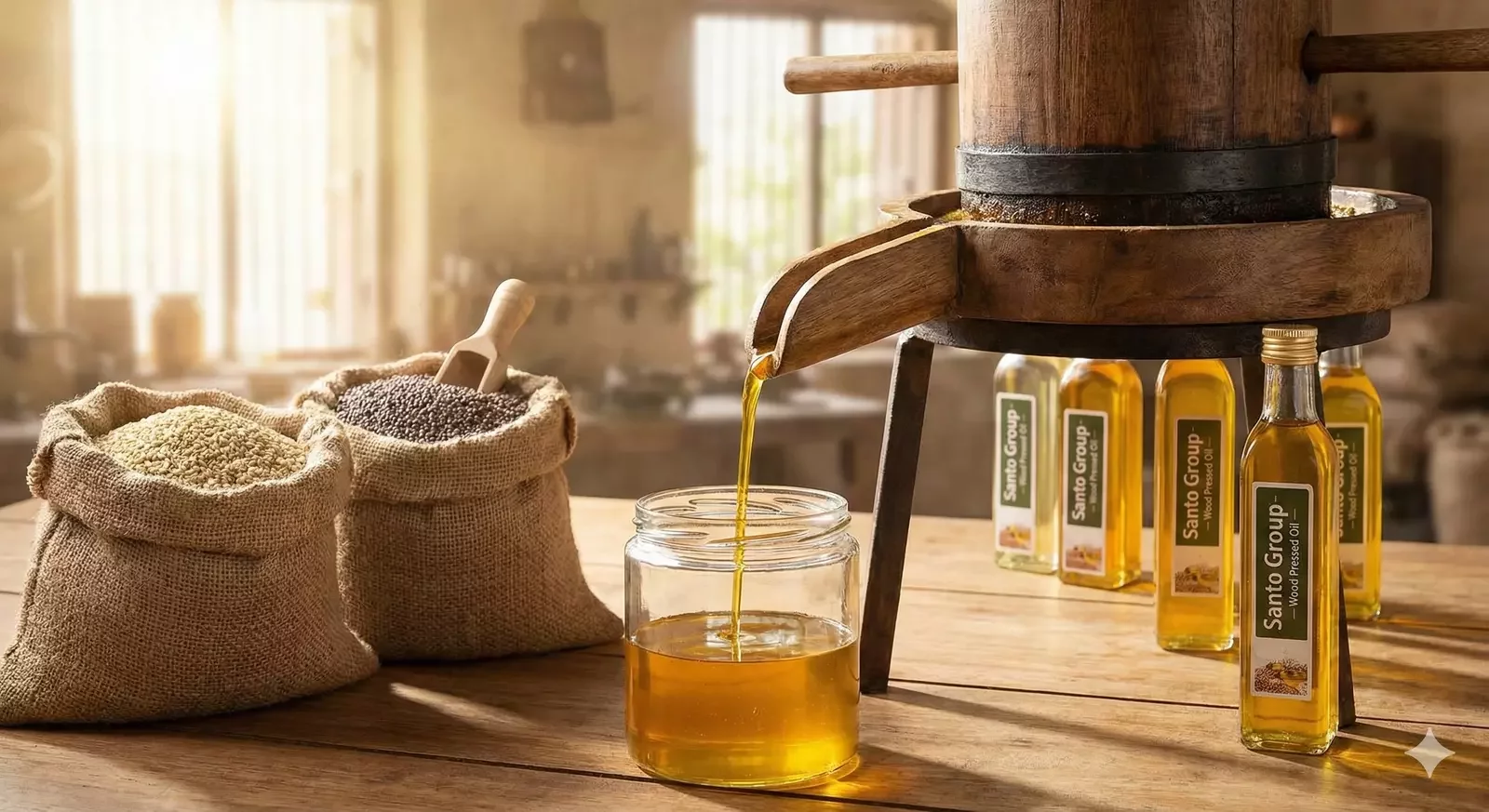
- The Method: We use the traditional "Kacchi Ghani" (Wood Press) technique at low temperatures (<50°C).
- The Value: Higher viscosity, superior aroma, and longer natural shelf life without preservatives.
The Resurgence of "Kacchi Ghani"
The Resurgence of "Kacchi Ghani" In the global edible oil market, "Cold Pressed" has become a buzzword. But for industrial buyers and premium food brands, the distinction is technical, not just marketing. At Santo Group, we adhere to the strict definition of Wood Pressed Extraction.
Why Temperature Matters: Cold Press vs. Refining
Why Temperature Matters Most commercial oils are extracted using expellers that generate high heat (above 100°C), followed by chemical refining using hexane. While this maximizes yield, it destroys heat-sensitive nutrients like Vitamin E and Omega-3 fatty acids.
The Quality Difference
In contrast, our Kacchi Ghani process operates at slow speeds. The wooden pestle crushes the seeds at room temperature. This ensures that the oil maintains its natural molecular structure, resulting in:
Zero Trans Fats: No chemical alteration occurs.
High Viscosity: The oil is thicker and richer.
Potent Aroma: The natural seed fragrance remains intact, reducing the need for artificial flavoring in end-products.
Economic Viability for Global Importers
Economic Viability for Importers While the cost per liter of Cold Pressed oil is higher than refined oil, the "potency per drop" offers better value for premium health brands. A smaller quantity delivers superior flavor and nutritional claims, allowing brands to command higher retail margins in the Wellness and Organic sectors.
★★★★★