Flax Seed Oil (Cold Pressed / Linseed Oil)
Richest Source of Omega-3 (ALA) | Food, Feed & Industrial Grade
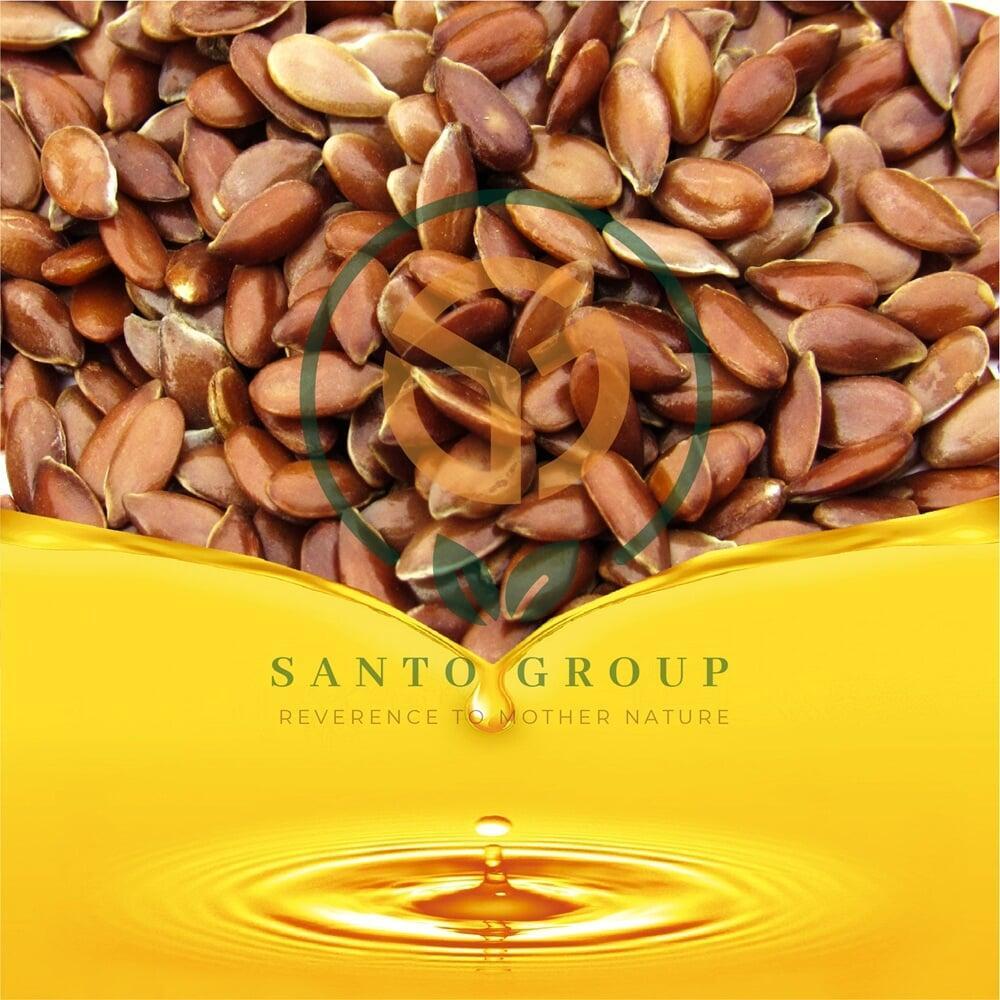
*Images & videos are for illustration only; actual products may vary in appearance, color, & size.
Botanical Name: Linum usitatissimum
Other Name(s): Flaxseed Oil, Alsi Oil, Linseeds Oil, Javas Oil, Agasi Oil, Masina Oil, Teisi Oil, etc.
Product Overview
Santo Group is a leading manufacturer of Flax Seed Oil (industrially known as Linseed Oil) in India. Sourced from nutrient-rich Linum usitatissimum seeds, we supply two premium grades: Cold Pressed Virgin Oil (High Omega-3 ALA) for nutraceuticals and Double Boiled Linseed Oil for paints and wood preservation. Our extraction process guarantees purity, making us a preferred partner for both the health food and industrial coating sectors.
Product Description
Key Quality Indicators
- High Alpha-Linolenic Acid (ALA): Our edible oil guarantees a minimum of 50% - 55% ALA, making it a potent vegetarian alternative to fish oil.
- Cold Pressed Purity: Extracted using mechanical expellers without chemical solvents (Hexane-Free), ensuring the oil remains natural and nutrient-dense (Cold-pressed at <40°C to retain the nutty flavor and high Omega-3 content for nutritional supplements and food fortification).
- Sediment Free: Filtered through a multi-stage filtration system to ensure a clear, golden-yellow appearance with no sludge.
Industrial Applications
Our bulk Flax Seed/Linseed Oil is a versatile raw material for:
- Nutraceuticals: Encapsulated in softgels as a vegetarian Omega-3 supplement for heart and brain health.
- Animal Nutrition: Widely used in Equine (Horse) Feed to improve coat shine, hoof health, and reduce inflammation.
- Paints & Coatings: The drying properties of Linseed Oil make it the base for oil paints, wood stains, and traditional varnishes.
- Wood Preservation: Used to treat cricket bats and premium furniture to prevent cracking and water damage.
Product Specifications
| Technical Specifications | : | Details |
|---|---|---|
| Botanical Name | : | Linum usitatissimum |
| Extraction Method | : | Cold Pressed (Raw) / Double Boiled (Industrial) |
| Origin | : | India (Rajasthan / Madhya Pradesh) |
| Appearance | : | Golden Yellow to Amber Liquid |
| Odor | : | Characteristic Nutty Odor |
| Omega-3 Content (ALA) | : | Min 50% - 55% |
| Acid Value | : | Max 2.0 mg KOH/g (Edible) |
| Peroxide Value | : | Max 10 meq/kg (Edible) |
*As these are general specifications and actual specifications may vary.
Packing and Packaging
| Particulars | : | Details |
|---|---|---|
| Bulk Packing | : | 25ltrs / 50ltr HDPE Drums |
| Industrial Packing | : | 190ltr Steel/HDPE Barrels |
| Small Packing | : | 1ltr / 5ltr Aluminium Bottles |
| Sample* Size(s) | : | 50 | 100 | 500 ML; 1 | 2 | 5 LTR |
| Documentation | : | COA, Origin Certificate |
| Customization | : | Availability based on offered options. |
*Paid Samples Only.
Frequently Asked Questions
1. What is the difference between Flax Seed Oil and Linseed Oil?
Answer: Technically, they are the same oil extracted from Linum usitatissimum. However, the term "Flax Seed Oil" is used for Edible/Nutritional Grade oil (Cold Pressed, unrefined). "Linseed Oil" typically refers to Industrial Grade oil used for paints and wood treatment, which may be boiled or refined.
2. Is your oil suitable for wood treatment (Cricket Bats/Furniture)?
Answer: Yes. We supply Raw Linseed Oil (slow drying) and Double Boiled Linseed Oil (fast drying) specifically for wood polishing, cricket bat seasoning, and protecting furniture from moisture.
3. What is the Omega-3 percentage in your oil?
Answer: Our Edible Grade Cold Pressed Flax Oil contains a minimum of 50% to 55% Alpha-Linolenic Acid (ALA), making it one of the most concentrated sources of vegetarian Omega-3 available.
4. Can I use this oil for frying?
Answer: No. Flax Seed Oil has a very low smoke point (107°C) and its healthy Omega-3 fats degrade rapidly under heat. It should only be used as a finishing oil (salads, dips) or taken as a supplement.
5. How should I store bulk Flax Oil?
Answer: Flax Oil is sensitive to heat and light (oxidation). We recommend storing barrels in a cool, dark warehouse (below 25°C). For opened containers, refrigeration is ideal to maintain freshness and prevent rancidity.