Why do global buyers prefer spices from the Thar Desert? We analyze how Rajasthan's arid climate creates 'water stress,' boosting essential oil content and Diosgenin levels in Fenugreek, while naturally lowering aflatoxin risks.
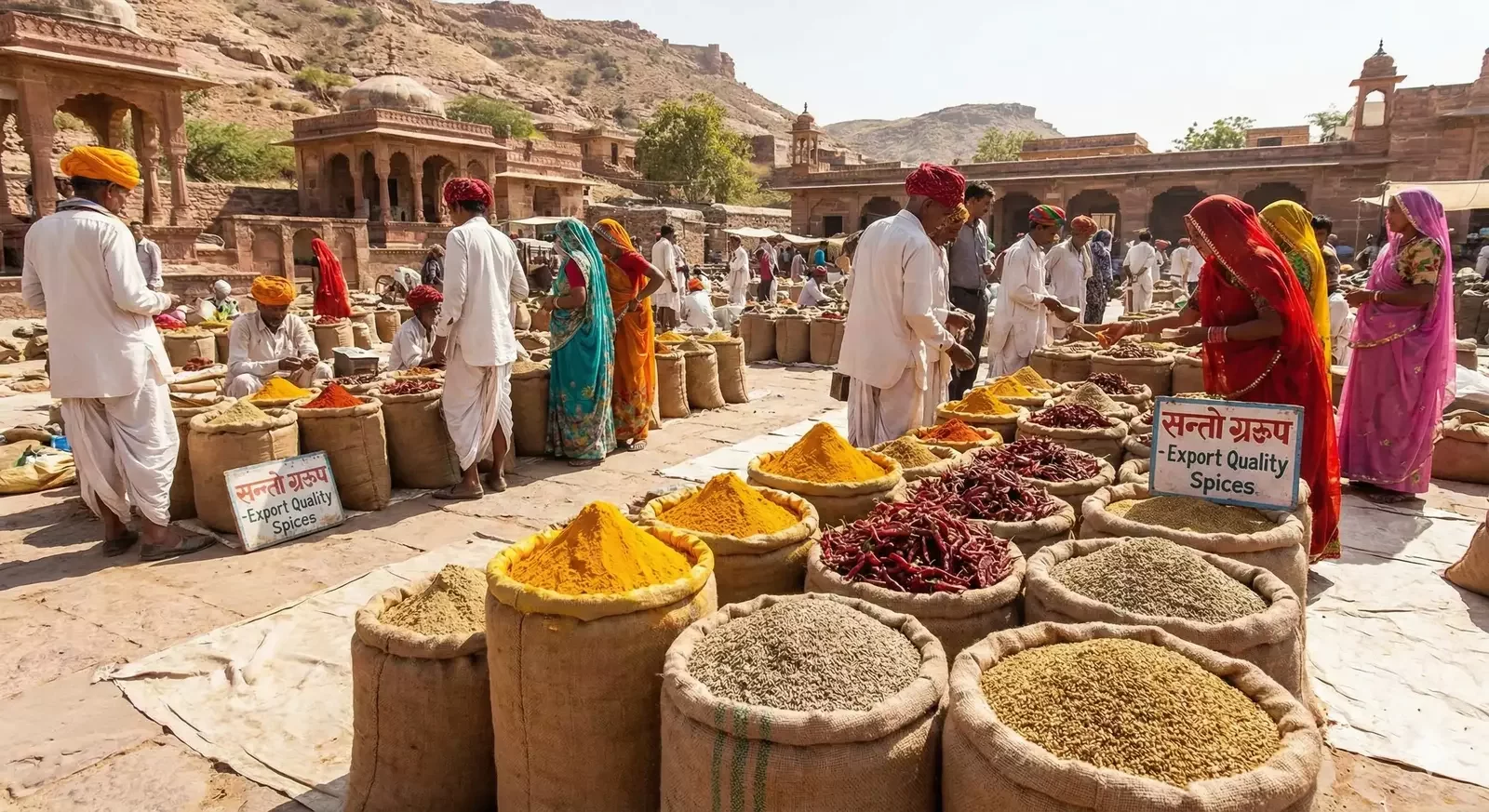
Executive Summary: Key Takeaways
The Science: "Water stress" in arid climates forces plants to produce more essential oils as a survival mechanism.
The Result: Spices like Cumin and Fenugreek from Rajasthan test for higher potency and aroma than those from humid regions.
The Safety: The dry air during harvest naturally minimizes moisture, significantly reducing the risk of aflatoxins and mold—a critical factor for EU and US export standards.
The "Stress" Advantage: How Climate Engineering Works
In agriculture, a "happy" plant grows large, but a "stressed" plant grows potent. This is the secret behind the spices of Rajasthan.
The state’s agro-climatic zone is characterized by scorching sun, sandy soil, and scarce water. To survive in this harsh environment, plants concentrate their energy into their reproductive parts—the seeds. This biological defense mechanism triggers the production of secondary metabolites, which are exactly what buyers value: Essential Oils and Active Compounds.
When you buy Cumin (Jeera) or Fennel (Saunf) from lush, water-rich regions, you often get larger seeds with diluted flavor. When you buy from the arid belts of Rajasthan, you get compact seeds packed with intense aroma and flavor.
Case Study: Diosgenin Content in Fenugreek (Methi)
While Fenugreek is a common spice globally, the varieties grown in the sandy, nitrogen-poor soils of Rajasthan’s Nagaur and Bikaner belts are biologically distinct.
The harsh, dry conditions force the plant to develop harder, more resilient seeds to protect its genetic material. This natural "hardening" results in a significantly higher concentration of Diosgenin—a steroid saponin that is the primary raw material for the pharmaceutical steroid industry and a key driver for nutraceutical buyers seeking blood-sugar regulation properties.
The Aroma Factor (Sotalolon)
Culinary buyers also prefer Rajasthan Fenugreek for its "Maple Syrup" aroma note. This is caused by the compound Sotalolon. In humid climates, this compound dissipates; in our arid climate, it remains locked inside the seed, delivering a flavor punch that is 2x more potent than fenugreek grown in humid river basins.
Beyond Methi: Cumin & Fennel
This climatic advantage extends across our entire spice portfolio.
Cumin (Jeera): Our region produces seeds with high Volatile Oil (Cuminaldehyde) content, crucial for the perfume and flavor industries.
Fennel (Saunf): The heat stress concentrates the anethole content, giving our fennel a sweeter, more intense licorice flavor favored by confectionery brands.
Conclusion: Sourcing Intelligence
Looking for High-Potency Spices? Browse our Fenugreek Seeds for our latest batch of Fenugreek or browse products catalog.
★★★★★